Kimura: the steps, the common mistakes and the defence
The kimura from closed guard: getting the hand to the mat, the right wrist grip, sitting up at the correct angle, the finish, and how to defend it.
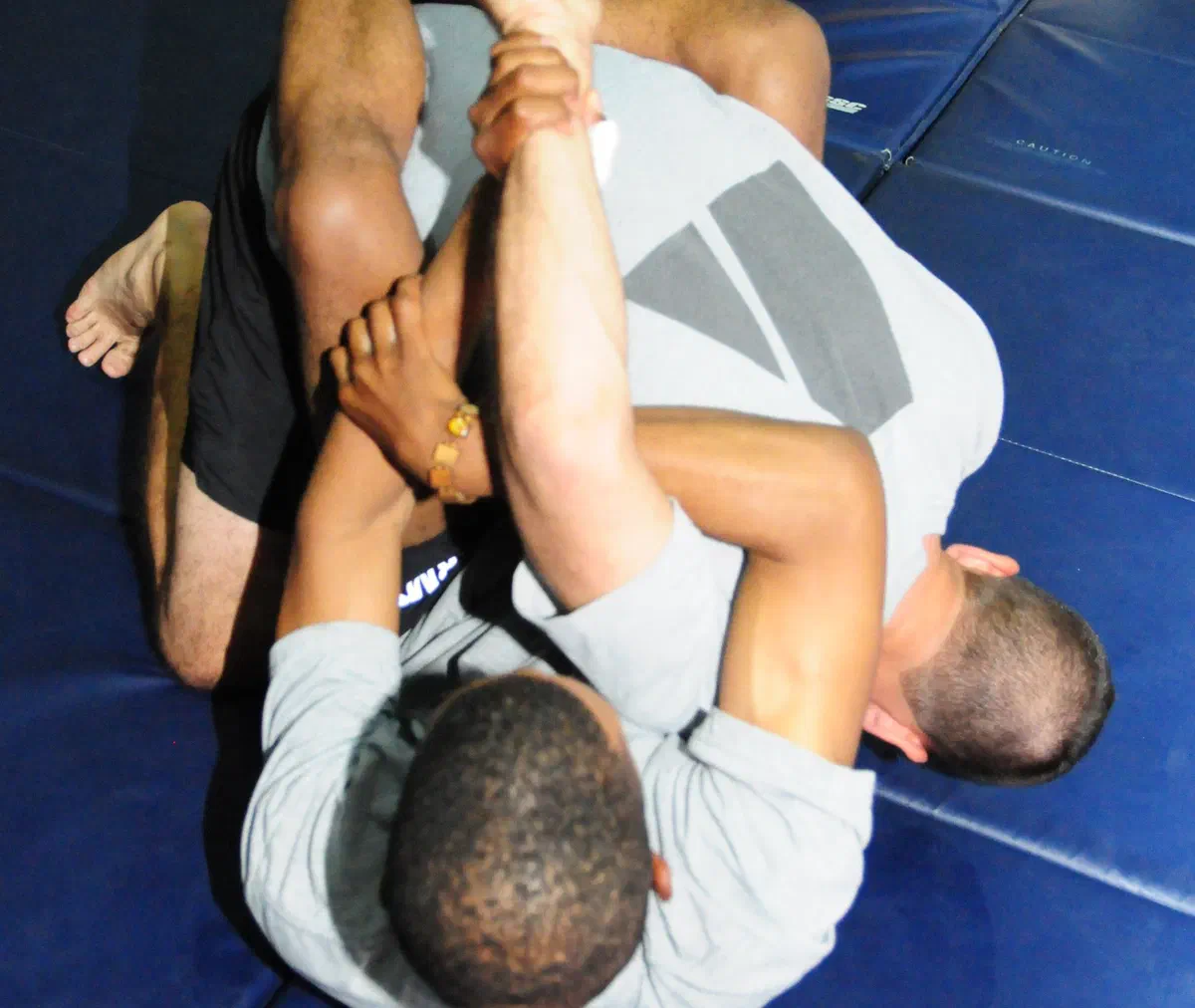

The kimura is a shoulder lock with a figure-four grip, and one of the most reliable attacks from closed guard. It works in the gi and without it, and even when it doesn’t finish, it often opens a sweep or a back take. In the video above, Nick “Chewy” Albin (Chewjitsu) shows the small details that make it work for beginners.
Where it starts
Closed guard, your opponent on their knees inside your legs.
What you’re trying to do
Trap one of their wrists, put your other arm over their shoulder to make a figure-four, and rotate their arm behind their back. The pressure goes into the shoulder.
The steps
- Break their posture and get one of their hands on the mat. Pull them in with your legs so they can’t push off.
- Grip that wrist with the same-side hand, right where the hand meets the forearm, not higher up the forearm. Keep your gripping arm straight.
- Open your guard and sit up onto your elbow, turning to the side. Don’t sit straight up; they’ll push you back down.
- Reach your free arm over their shoulder and grab your own wrist: that’s the figure-four. In this variation, use a thumbless grip on your own wrist.
- Pinch your elbows together: the closer they are, the stronger the lock.
- Fall back, scoot your hips out and turn onto your side, so your whole body turns their wrist behind their back, not just your arms. Finish slowly.
The most common mistake
Gripping with a bent arm. A bent arm gives them space to twist the wrist and pull free. Straight arm on the wrist, and keep the hand pinned to the mat until the figure-four is locked.
The one cue to remember
Sit up to the side, not to the front.
The defence
If someone sets up a kimura on you, keep your elbows close to your body and your posture up. If they already have the figure-four, grab your own belt or gi trousers, or your own leg, so they can’t rotate your arm.
Safety
Apply the pressure slowly. If you’re caught, tap early rather than waiting for pain.
When not to force it
If they defend by grabbing their belt or leg, don’t wrestle the grip for a long time. A kimura grip makes sweeps and back takes much easier, so use it to change position.