What is jiu-jitsu? A short guide for beginners
Where jiu-jitsu comes from, what a class looks like, gi versus no-gi, and how it differs from judo and wrestling. Explained simply, for anyone just starting out.
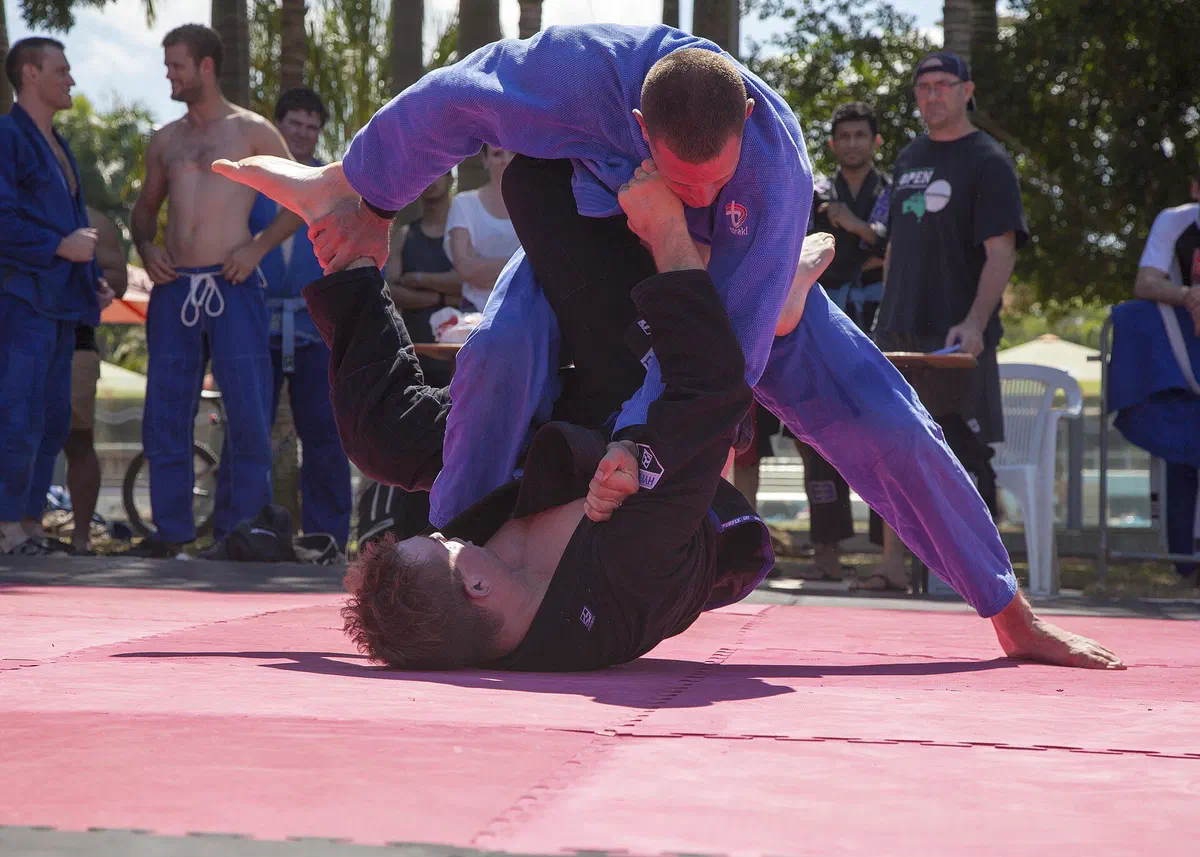
Jiu-jitsu is a grappling sport. Two people try to control each other and finish the match with a choke or joint lock. There is no striking. When your partner taps — by tapping you or the mat several times — you let go straight away. That’s why you can train hard several times a week. Rest still matters: it’s a contact sport.
When people in Georgia talk about jiu-jitsu today, they almost always mean Brazilian jiu-jitsu (BJJ), and that is what we write about too. It differs from the traditional Japanese schools of jujutsu.
Where it comes from
In Japan, “jujutsu” was used as a broad name for different schools and methods of unarmed fighting. In 1882, Jigoro Kano created judo using techniques drawn from older schools. He selected and adapted techniques for safer practice and made randori — free practice against resistance — central to training.
One of Kano’s students, Mitsuyo Maeda, travelled the world taking on fighters from other styles and settled in Brazil in the 1910s. There, he was involved in teaching Carlos Gracie and other students. Over time, the Gracie family, other Brazilian practitioners and their students shaped the sport we now know as BJJ. It places particular emphasis on position, leverage and ground fighting, helping a lighter person control a larger opponent.
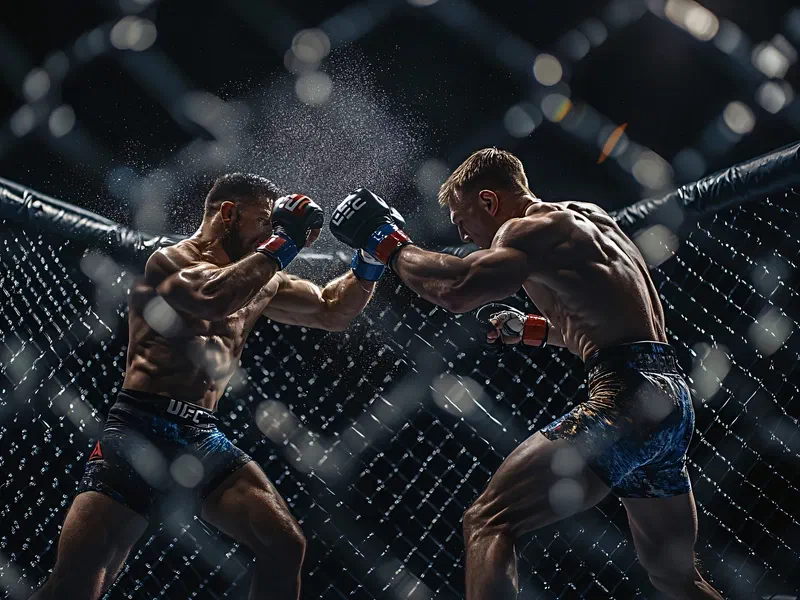
BJJ reached a broad international audience in 1993 at the first UFC. Royce Gracie, one of the lightest men in the tournament, submitted all three opponents and won the event. Today, almost every professional MMA fighter studies jiu-jitsu, including Georgians competing in the UFC. We write about them on our fighters page.
What a class looks like
Most classes last 60–90 minutes and go roughly like this:
- Warm-up: running, movement drills, learning to fall, and shrimping (moving your hips away while lying on your back).
- Technique: the coach shows one or two techniques, and you repeat them with a partner. Your partner offers no resistance at first: you learn the movement slowly, then increase the pace.
- Positional sparring: you start from a set position — for example, one person controlling the other in side control — and each partner has a goal.
- Sparring: free rolling, usually in rounds of 5–6 minutes, with both partners actively resisting.
In our experience, the first few weeks are confusing: sparring starts and you have no idea what to do. That is normal. Tell the coach that it is your first class. A good gym will pair a beginner with an experienced partner who controls the pace, or let the beginner watch sparring at first.
Gi and no-gi
In the gi, you train in a uniform similar to the one used in judo. You can grip the collar and sleeves, and many chokes use the collar. Those extra grips change the game and create more ways to control an opponent.
In no-gi, you train in a rash guard and shorts. Gripping the clothing is not allowed, so you control the wrists, neck and body instead. Movement is often less restricted, and the style has much in common with the grappling used in wrestling and MMA.
Most gyms teach both. To begin, choose the format your gym offers to beginners. We have written separately about what to buy and what it costs.
Belts
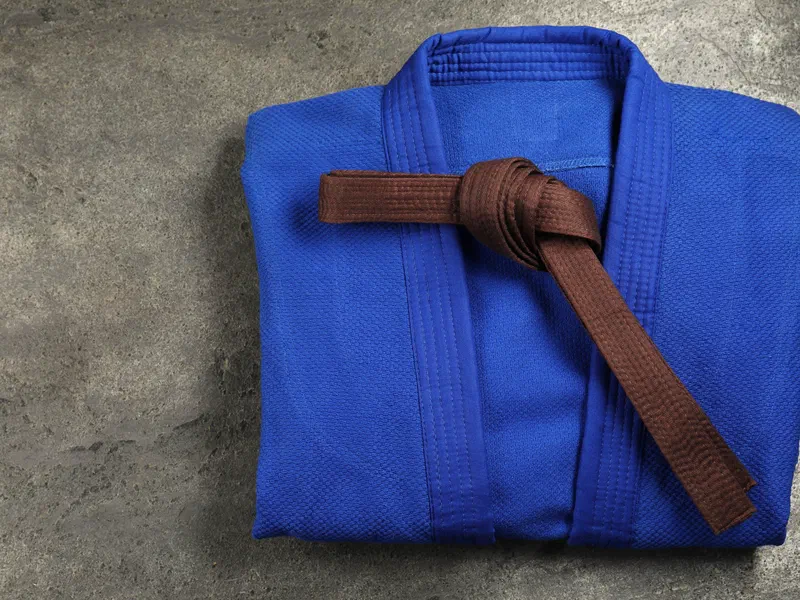
The main adult belts are white, blue, purple, brown and black. Blue took us about two years, training three or four times a week, although promotion standards and timelines always depend on the coach and the academy. Reaching black belt often takes 8–12 years or more. Children use a separate belt system. More detail: jiu-jitsu belts.
How it differs from judo and wrestling
One of the clearest differences is fighting from your back. In judo or wrestling, landing cleanly on your back can end the match or give your opponent a major advantage. In jiu-jitsu, you can keep fighting from your back: you control your opponent with your legs — this is called the guard — and attack or sweep from there.
In judo, one clean throw can be enough to win. In jiu-jitsu, a takedown scores two points under IBJJF rules and the match usually continues on the ground. Sport sambo bans chokes; in jiu-jitsu, they are one of the main weapons.
A fuller comparison of the four sports: jiu-jitsu, judo, chidaoba or sambo.
Who can start
Almost anyone. Many gyms accept children from around four years old, although the minimum age and class format depend on the academy. Adults can start at any age. You do not need to get fit first: your fitness improves as you train. Women and girls train jiu-jitsu too.
The control and composure learned in jiu-jitsu can also be useful for self-defence. But it’s a sport, not a complete self-defence system: there are no strikes or weapons in training.
For parents, we have a separate guide: jiu-jitsu for kids.
Is it safe?
Jiu-jitsu is a contact sport, and the risk of injury is not zero. There is no striking, and safe practice of joint locks and chokes depends on the tap: you apply the technique with control, your partner taps in time, and you let go at once. In our experience, many injuries come from tapping late, uncontrolled movement or using too much force. Tap early, agree on an appropriate pace with your partner, and choose a gym where the coach watches the sparring.
Before your first class
- If you do not have a gi, wear a T-shirt and sports trousers with no zips or pockets.
- Trim your nails and take off any jewellery.
- Bring water and flip-flops for walking off the mat.
- Do not eat a heavy meal in the two hours before class.
- Tell the coach about any injuries or health limitations.
- Do not try to learn everything on day one.
Jiu-jitsu is a marathon, not a sprint. What matters is not how much you learn in the first month, but whether you are still training a year later.