Jiu-jitsu for kids: what age can a child start, and what happens at the first class?
A realistic starting age, how safety is managed, what the first class can look like for a shy child, how often to train, and the one thing coaches ask of parents.
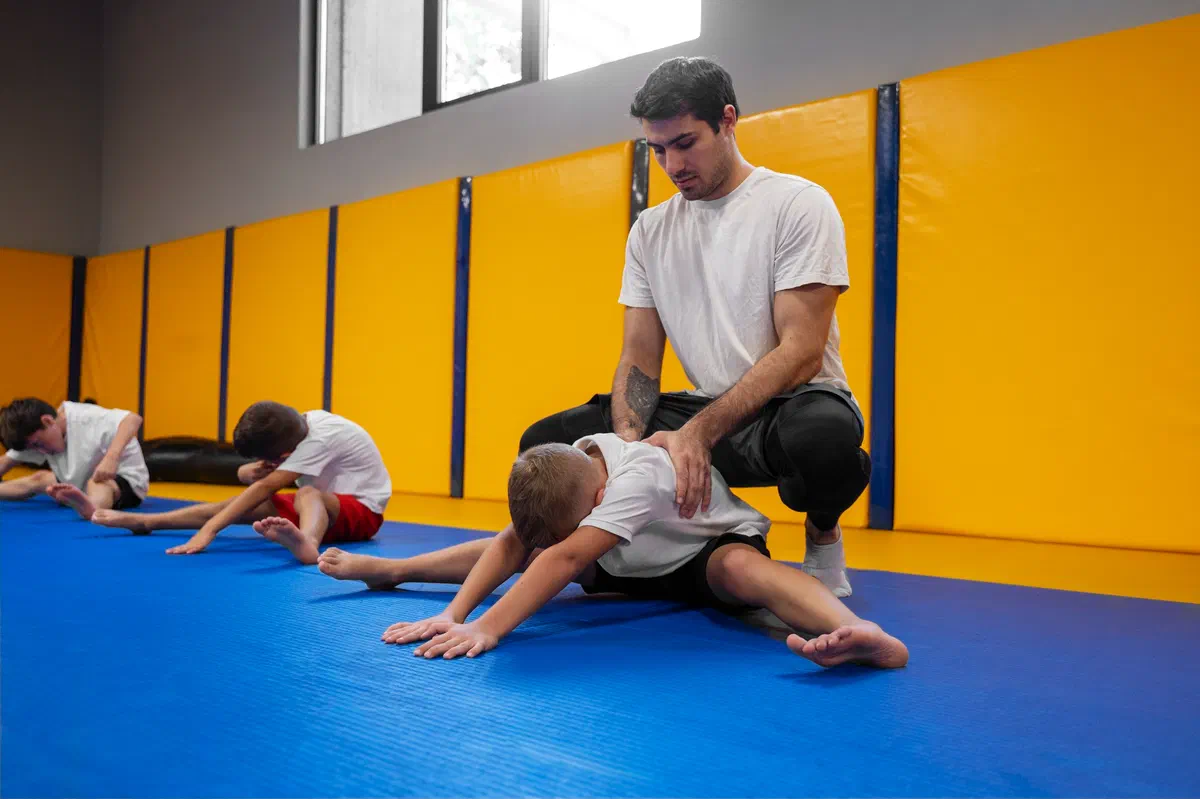
Parents usually ask us two things first: “How young can my child start?” and “Is it safe?” Here are our honest answers, along with what to expect in the first class and over the following months.
What age can a child start?
The youngest children we’ve seen on the mat were four. But a four-year-old doesn’t learn jiu-jitsu the way an older child does. At that age the priority is movement: coordination, balance, mobility, and learning to fall and get up safely. A good class for four-year-olds is mostly that, with a little grappling through play. A four-year-old who already understands jiu-jitsu positions and goals is very rare.
In our experience, real technical jiu-jitsu starts to make sense at around six or seven, depending on the child. That’s when most children can hold a position, remember a technique and begin to understand why it works. We see the same with judo and wrestling: readiness matters at least as much as age.
Is it safe?
Jiu-jitsu is a contact sport, so the risk of injury isn’t zero. But in our experience a well-run children’s class is pretty safe. That depends on the adults: trained coaches, sensible pairing by age and size, techniques suited to the age group, controlled sparring and clear rules.
Keeping the class safe is the coach’s job. We watch every round and stop it whenever we need to. What we add from the very first day is responsibility. Children learn that their movement can hurt a partner, so they have to control it.
Two things are taught from the start. First, tap early, so a hold stops well before there’s any risk of injury. Second, look after your partner. If you’re bigger or stronger, it’s your job to be careful. With greater power comes greater responsibility, and children often understand that better than adults expect.
The first class
Most children who start with us are six or seven and already go to school, so they know how a class works: a teacher, a group, rules. We pair each new child with a more experienced child who shows them where to stand, how the warm-up works and what happens next.
Some children still feel overwhelmed. A lot is happening at once, and that’s normal. We don’t force anyone. If a child is struggling, we decide together with the parent whether it helps more for the parent to stay in the room or wait just outside. If the child is upset, they can sit beside the mat, watch, and join in when they feel ready.
Sometimes that works on the first day. Sometimes it takes a few visits. And sometimes it doesn’t work at all. Every child comes from a different family and situation, and no single approach works for everybody. Our job is to help a child find their place in the group, not to force them into it.
How often, and when will you notice a difference?
Anything is better than nothing, so twice a week is a fine start. But to see good results in jiu-jitsu, or in any grappling art, it takes three or four times a week. Build up to that as your child enjoys it and recovers well between classes.
Give it a few months. That’s often when parents begin to notice a change. It might be more confidence, more discipline, or a calmer child at home. Sometimes it’s all of these, sometimes just one. Every child responds differently.
If you’re wondering how belts and stripes work for children, we’ve written about that in our guide to jiu-jitsu belts.
One rule parents should know
Coaches will work patiently with a shy child, a child who is still developing their coordination, or a child who cries at first. What a group class can’t absorb is one child repeatedly disrupting it. After a couple of warnings and a conversation with the parents, we may ask the child to take a break, because the other children need the coach’s attention too. We’re coaches: we teach sport, discipline and martial arts, but we can’t replace a child’s parent or teacher.
The one thing we ask of parents
Once you’ve chosen an academy and a coach, let the coaches do their job. If you have a question or a worry, talk to us calmly after class. And if your child is struggling or the group isn’t right for them, we’ll tell you.
Safety: jiu-jitsu is a contact sport, and the risk of injury isn’t zero. Before choosing a programme, ask the academy about its coaches’ training, age groups, permitted techniques, how sparring is supervised and what happens if a child gets hurt. Discuss individual health questions with your child’s doctor.